

AAC & Communication Solutions
Everything you need to give someone a voice - in one place.
Augmentative and Alternative Communication (AAC) covers every tool that helps a person communicate when speech alone isn't enough. Whether your child has just started their AAC journey, or you're supporting a student, client, or family member who needs a more robust system - this is where you start.
Assistive Tech is an NDIS Registered Provider and a specialist AAC supplier. Browse dedicated communication devices from GoTalk, tablet-based AAC apps, and pre-configured bundles that arrive ready to use - from home to school to community.
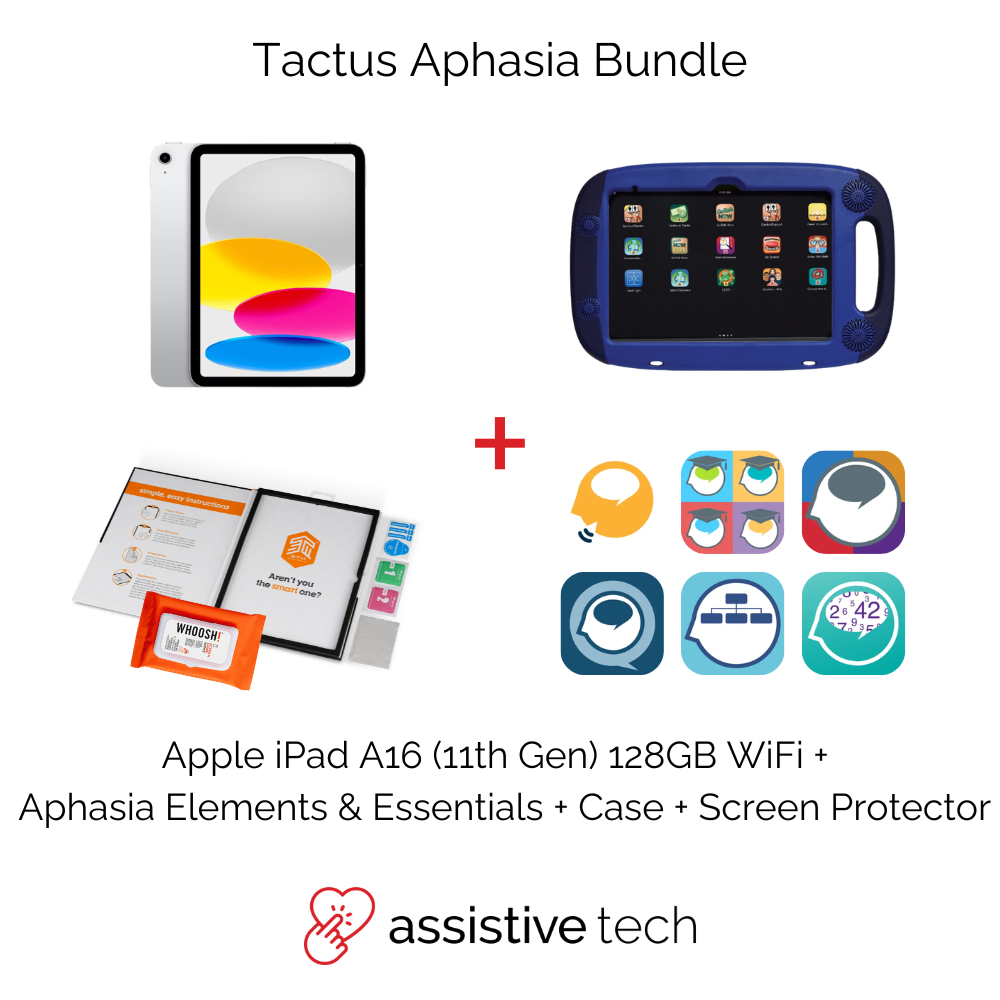
AAC Bundles - Ready to Use From Day One
Stop spending hours configuring devices. An AAC bundle gives you everything in one box - the right iPad, the right AAC app pre-loaded, a protective case, and the accessories your therapist already recommends.
Our bundles are built around Speech Pathologist-recommended combinations, so the device arrives set up and ready to communicate. Less setup stress for you, more time actually using it.
Browse Prolquo, LAMP, Tatctus, and other clinician-designed bundle configurations - available exclusively from Assistive Tech.
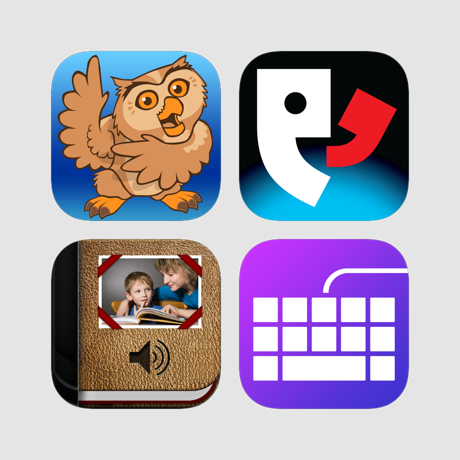
AAC Apps - Communication on a Screen You Already Have
Your child's iPad can become their voice. AAC apps turn a tablet into a dynamic communication system - with symbol grids, text-based vocabulary, or a combination of both that grows as their communication develops.
Apps like Proloquo2Go, Snap Core First, TouchChat, and Grid 3 let Speech Pathologists customise vocabulary, access methods, and layouts so the system fits the person - not the other way around.
If your therapist has recommended a specific AAC app, Assistive Tech can help you source it.
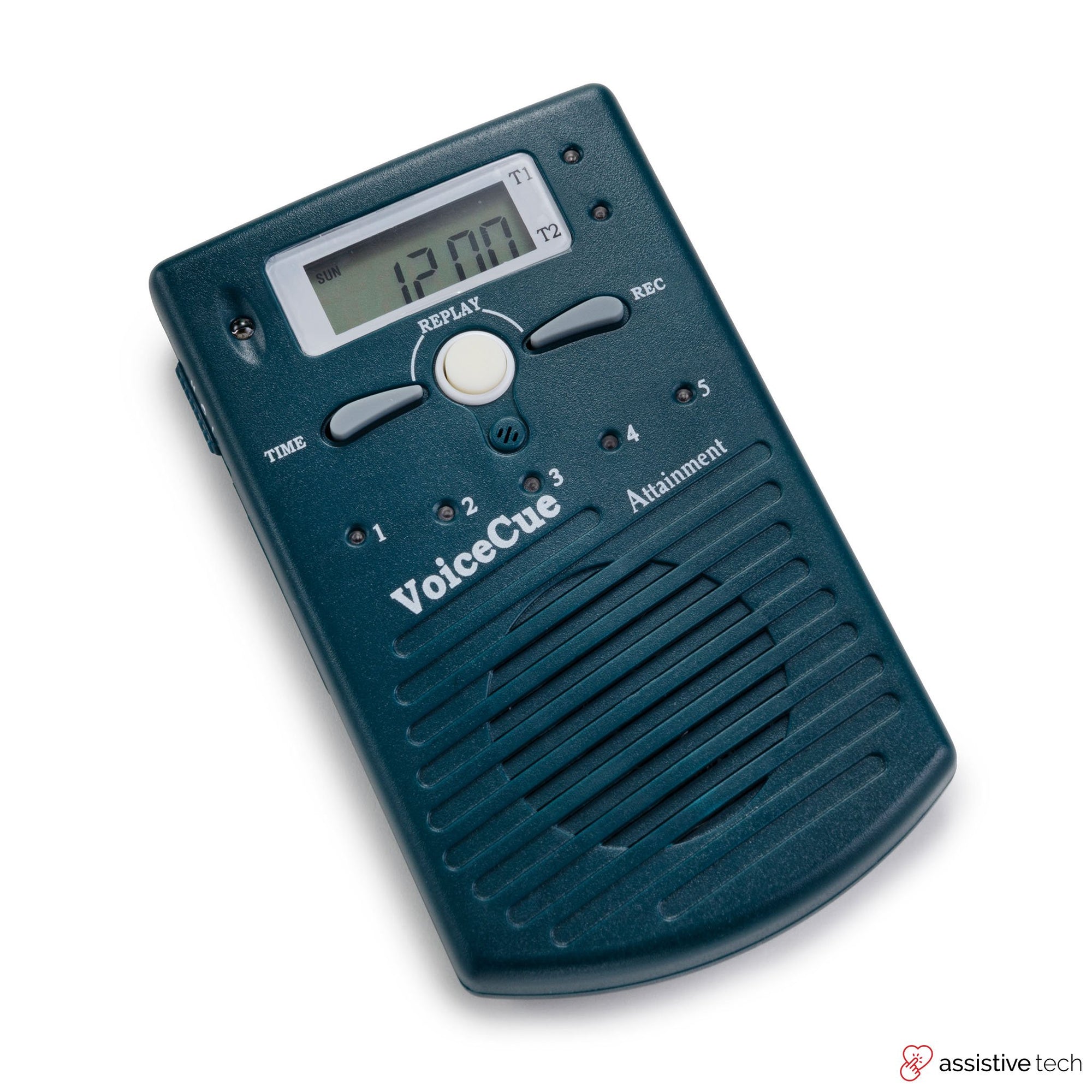
GoTalk Devices - Simple, Durable, Screen-Free Communication
Not everyone thrives with a touchscreen. GoTalk devices give communicators big, tactile buttons with pre-recorded messages - making them ideal for early communicators, people who prefer low-tech AAC, or anyone building confidence with choice-making and routine-based communication.
The GoTalk range includes single-message buttons right through to multi-level devices with 20+ cells. They're robust, portable, and don't need a Wi-Fi connection or battery charge to work mid-session.
GoTalk devices are widely used in early intervention, special education classrooms, and community settings across Australia.
Frequently Asked Questions
What is AAC?
What is AAC?
AAC stands for Augmentative and Alternative Communication. It's the umbrella term for every tool, strategy, or system that helps someone communicate when speech alone isn't enough - whether that means supplementing existing speech or replacing it entirely.
AAC includes a wide range of options: from low-tech picture boards and communication cards, to dedicated speech-generating devices like GoTalk, to tablet-based apps like Proloquo2Go, Snap Core First, TouchChat, and Grid 3. It also includes strategies like sign language, PECS (Picture Exchange Communication System), and eye gaze technology.
AAC is used by children and adults with autism, cerebral palsy, acquired brain injuries, stroke, ALS, intellectual disability, Down syndrome, and many other conditions. It is not a last resort - research consistently shows that AAC supports, rather than inhibits, natural speech development.
If you're exploring AAC for the first time, Assistive Tech is an NDIS Registered Provider with a specialist team ready to help you find the right starting point.
Who can benefit from AAC?
Who can benefit from AAC?
AAC can benefit anyone who has difficulty communicating using speech alone - regardless of age, diagnosis, or current communication level. There is no minimum communication ability required to start with AAC.
Children commonly use AAC when they have autism spectrum disorder, cerebral palsy, Down syndrome, childhood apraxia of speech, or developmental language disorders. Adults may turn to AAC following a stroke, traumatic brain injury, ALS (Motor Neurone Disease), Parkinson's disease, or progressive neurological conditions.
AAC is used across every environment - at home during daily routines, at school to support learning and social connection, in therapy sessions with Speech Pathologists and OTs, and in the community to support independence and participation.
A critical point: AAC is appropriate at any communication level. It is regularly introduced to children as young as 12–18 months when communication delays are identified. Early introduction does not slow speech development - it supports it.
If you're unsure whether AAC is right for the person you support, a Speech Pathologist assessment is the best first step. Assistive Tech can help with NDIS funding guidance once a recommendation is in place.
How do I choose the right AAC solution?
How do I choose the right AAC solution?
Choosing the right AAC solution depends on a combination of factors assessed by a qualified Speech Pathologist, including: the person's current communication level, motor skills and access method (touch, eye gaze, switch access, or partner-assisted scanning), vocabulary needs, cognitive development, and the environments where they'll use the device most.
In practice, this means some people are best suited to a dedicated device like a GoTalk - robust, screen-free, and simple to use. Others need a dynamic tablet-based system with an app like Proloquo2Go or Grid 3, which grows with vocabulary development over time. For those who need a complete solution from day one, a pre-configured AAC bundle removes the guesswork by combining the right iPad, app, case, and accessories.
A Speech Pathologist (ideally one with AAC specialisation) will conduct a full communication assessment and provide a formal recommendation. This recommendation is typically required to access NDIS funding for AAC devices.
Assistive Tech is an NDIS Registered Provider. Once you have a recommendation, our team can help you source the right product, process your NDIS order, and connect you with setup support if needed. Contact us at support@assistivetech.com.au or call 1300 088 222.
What types of AAC products are available?
What types of AAC products are available?
AAC products fall into three main categories, each suited to different communication needs:
Dedicated communication devices - These are standalone speech-generating devices with fixed layouts and physical buttons. GoTalk devices are a widely used example, ranging from simple single-message communicators to multi-level devices with 20+ message cells. They are durable, reliable, and don't require internet or app management.
Tablet-based AAC apps - Apps installed on an iPad or Android tablet that provide dynamic, customisable communication systems. Leading apps available in Australia include Proloquo2Go, Snap Core First, TouchChat HD, Grid 3, and Cboard. These apps support symbol-based and text-based communication, grow with vocabulary development, and integrate with iPad accessibility features including Switch Control and Eye Gaze.
AAC bundles - Pre-configured packages that combine a compatible tablet, AAC app (already loaded), protective case, and any recommended accessories. Bundles like the Tactus Aphasia Bundle are designed to reduce setup time and ensure device-app compatibility from day one. They are particularly useful when NDIS funding is being used to purchase a complete system.
Assistive Tech stocks all three categories and can assist with NDIS-funded purchases.
What is the difference between AAC devices and AAC apps?
What is the difference between AAC devices and AAC apps?
AAC devices and AAC apps serve similar goals - helping someone communicate - but they work in different ways and suit different people.
AAC devices (like GoTalk) are standalone, purpose-built tools with physical buttons and pre-recorded messages. They don't require internet access, don't have distracting apps or notifications, and are extremely durable -- making them ideal for early communicators, people who benefit from tactile feedback, or settings where simplicity is important. They are typically lower-tech, lower-cost, and easier for communication partners to understand and use.
AAC apps (like Proloquo2Go, Snap Core First, Grid 3, and TouchChat) run on iPads or tablets and offer dynamic, expandable vocabulary systems. They can support thousands of words, grow with the user over time, and be customised by a Speech Pathologist to match communication goals, access methods (touch, switch, eye gaze), and vocabulary level. They are more flexible and powerful, but require a tablet, app purchase, and professional setup.
Many AAC users use both - a low-tech device for quick communication in familiar settings, and a tablet-based app for fuller language expression. Your Speech Pathologist can advise on the best combination for your situation. Assistive Tech stocks both categories and supports NDIS-funded purchases of both.
Are AAC bundles suitable for beginners?
Are AAC bundles suitable for beginners?
Yes - AAC bundles are often an excellent starting point, especially when you're navigating AAC for the first time and don't want to research device-app compatibility yourself.
A bundle removes the most common early pain point: buying an iPad, then an app, then a case, and discovering they don't all work together optimally. Bundles are assembled specifically to ensure the hardware, software, and accessories are compatible and ready to use from the moment they arrive.
Bundles like the Prolquo Bundle include a pre-configured iPad with AAC apps (such as Proloquo and Proloquo Coach) already installed, a protective case, and screen protector - everything a clinician or carer needs to start right away.
That said, a Speech Pathologist should still be involved in the selection process to ensure the bundle matches the person's communication level, access method, and vocabulary goals. A bundle is the right hardware solution - professional support helps ensure it's used to its full potential.
Assistive Tech is an NDIS Registered Provider and can assist with funding and ordering. Reach us at 1300 088 222 or support@assistivetech.com.au.
Does AAC need to be set up by a professional?
Does AAC need to be set up by a professional?
Yes - and it's worth understanding why, not just accepting it as a rule. AAC is most effective when the vocabulary, access method, and system complexity are matched to the person's current communication level and goals. A Speech Pathologist assesses all of this and provides the clinical foundation that makes the system actually work.
In practice, a Speech Pathologist (and often an Occupational Therapist for access method and mounting) will: assess communication needs and current level, recommend specific AAC tools, configure vocabulary and layout within the app or device, train the person and their communication partners, and review and adjust the system as needs evolve.
For NDIS participants, a formal recommendation from a Speech Pathologist is typically required to access funding for AAC devices, apps, or bundles as an Assistive Technology support.
That doesn't mean you can't explore AAC independently - many families start researching and trialling tools before a formal assessment. But for lasting results, ongoing Speech Pathologist support makes a significant difference.
Assistive Tech works closely with Speech Pathologists and allied health teams across Australia. We're an NDIS Registered Provider and can assist your therapist team with product sourcing and funding support.
Are AAC solutions suitable for school use?
Are AAC solutions suitable for school use?
Absolutely. AAC is used in schools across Australia at every level - from early intervention and prep classes through to secondary and post-school settings.
In educational settings, AAC tools support classroom participation (answering questions, contributing to group activities), learning routines (schedule boards, now/next systems), social interaction with peers and teachers, and in some cases, behaviour support strategies by giving students a way to express wants, needs, and feelings.
GoTalk devices are commonly used in special education classrooms because they are durable, easy for teachers and integration aides to operate, and don't require screen time. Tablet-based apps like Proloquo2Go and Snap Core First are widely used for students who need richer vocabulary and are working toward literacy alongside AAC.
For best outcomes at school, involve the school's Speech Pathologist or support team before selecting a device. The AAC system used at home and in therapy should ideally match what's used at school - consistency across environments is one of the most important factors in AAC progress.